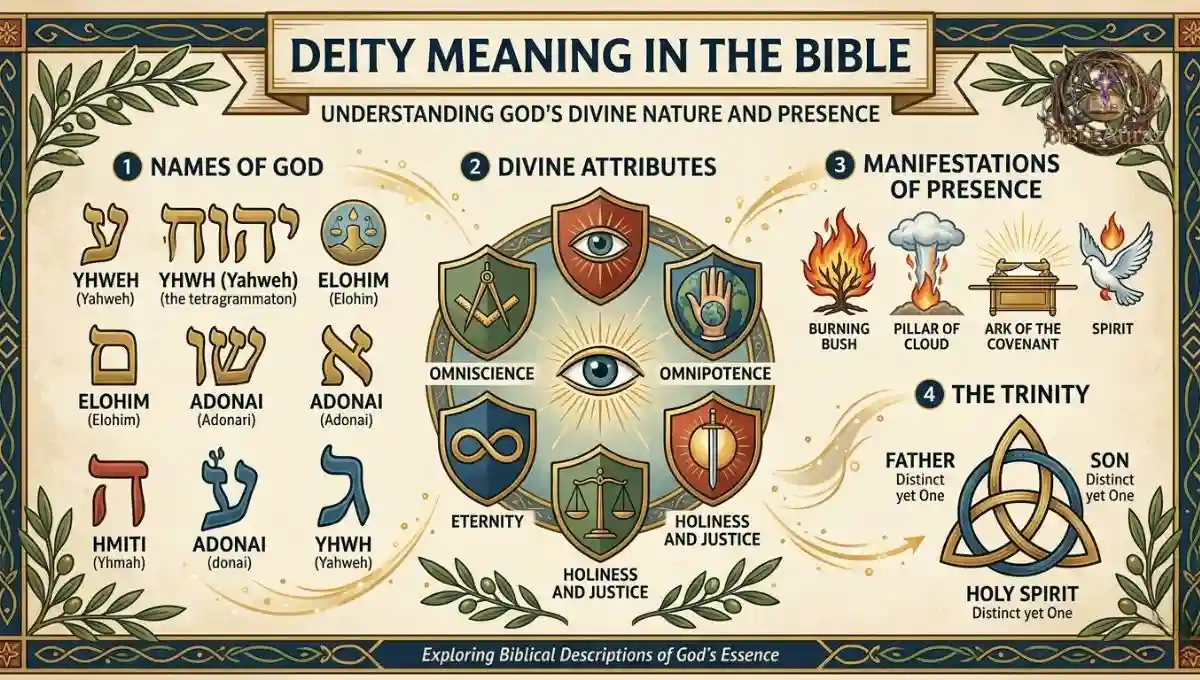
Understanding deity meaning in the Bible helps believers grasp who God truly is. This single concept shapes how Christians view worship, prayer, and daily faith.
Across both Testaments, Scripture reveals God’s divine nature through His names, actions, and promises. Exploring deity meaning in the Bible opens the door to a deeper relationship with the Creator.
This article walks through the biblical meaning of deity, the deity of Christ, the Trinity, and how these truths apply to everyday spiritual life.
Biblical Meaning of Deity
The biblical meaning of deity centers on God’s eternal, supreme, and unmatched nature. He is not a created being, but the source of all creation.
When Scripture speaks of deity meaning in the Bible, it points to qualities such as omniscience, omnipresence, holiness, and eternal existence found only in God.
1. Definition of Deity in the Bible
In Christian theology, deity refers to the essential nature of God as divine, self-existent, and worthy of worship. Understanding what is deity in the Bible starts with recognizing God as the “I AM” (Exodus 3:14).
The meaning of deity in Christianity is tied directly to God’s claim of exclusivity. Isaiah 45:5 declares, “I am the Lord, and there is no other; apart from me there is no God.”
| Aspect of Deity | Biblical Reference | Meaning |
| Self-Existence | Exodus 3:14 | God exists independently, needing nothing |
| Eternal Nature | Psalm 90:2 | God has no beginning or end |
| Holiness | Isaiah 6:3 | God is set apart, morally perfect |
| Sovereignty | Daniel 4:35 | God rules over all creation |
2. Deity of God the Father
God’s divine nature in the Bible is first revealed through the Father, who creates, sustains, and governs the universe. Genesis 1:1 introduces Him as the originator of heaven and earth.
The deity of God meaning becomes clear through His attributes: He is all-knowing, all-powerful, and present everywhere. Psalm 139:7-10 describes His presence reaching every corner of creation.
Christians often emphasize this when discussing God’s divine nature in the Bible, since it forms the foundation for understanding the Father’s authority over all things.
3. Deity of Jesus Christ
Is Jesus God in the Bible? Scripture answers clearly through passages like John 1:1, which states that the Word was God and was with God from the beginning.
The deity of Christ meaning is reinforced through His miracles, His forgiveness of sins, and His acceptance of worship—actions reserved for God alone in Jewish tradition.
Colossians 2:9 affirms that “in Christ all the fullness of the Deity lives in bodily form,” directly linking Jesus to the divine nature of God the Father.
4. Deity and the Trinity
The Holy Trinity meaning describes one God existing eternally as three persons: Father, Son, and Holy Spirit. Each person is fully God, yet there is only one God.
Matthew 28:19 reflects this Trinity doctrine explained through the baptismal formula naming all three persons together as equally divine.
Grasping deity meaning in the Bible alongside the Trinity helps believers avoid confusing the unity of God’s being with the distinct roles each person plays.
Common Misunderstandings About Deity in the Bible
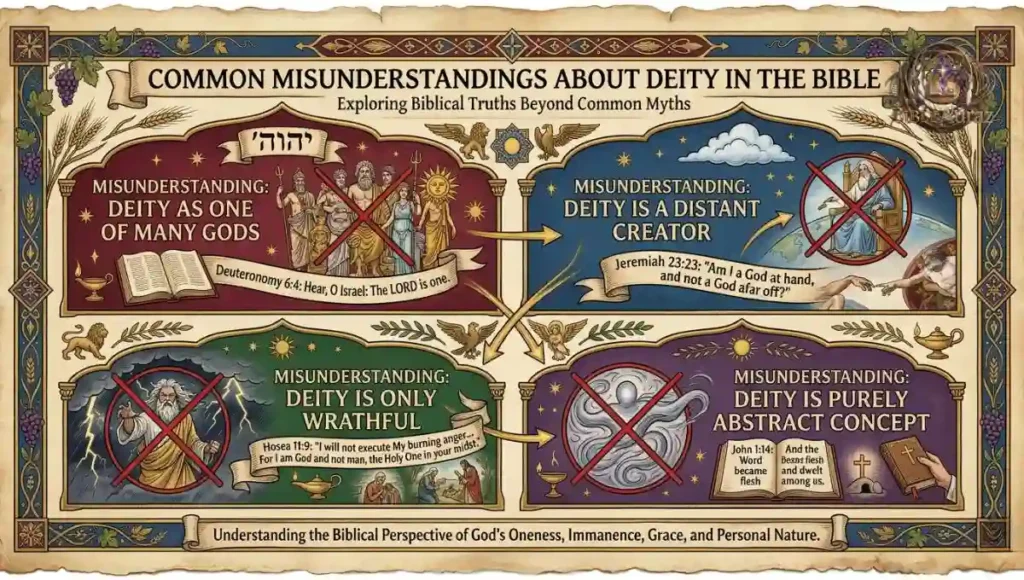
Many people confuse deity with simply being “important” or “powerful,” but biblical deity carries a far deeper sense of eternal self-existence and moral perfection.
Below are common misunderstandings believers should be aware of:
- Believing “deity” only applies to God the Father, ignoring the deity of Christ meaning found throughout the New Testament
- Assuming the Trinity means three separate gods rather than one God in three persons
- Viewing the Holy Spirit as merely a force rather than a divine person with personality and will
- Thinking God’s nature in Scripture changes depending on the era or covenant
Recent survey data highlights how widespread these misunderstandings remain. According to Arizona Christian University’s American Worldview Inventory, just 11% of Americans surveyed affirmed belief in the Trinity as three distinct but inseparable and equal persons in one infinite Being.
Similarly, Ligonier Ministries research found that while about 72% of Americans claim to affirm the Trinity, roughly half still describe Jesus as a great teacher without fully acknowledging His deity.
These statistics show why returning to the biblical meaning of deity matters for sound Christian belief.
Must Read: Eliana Meaning in Bible: A Beautiful Name Rooted in God’s Answer
Spiritual Significance and Symbolism of Deity
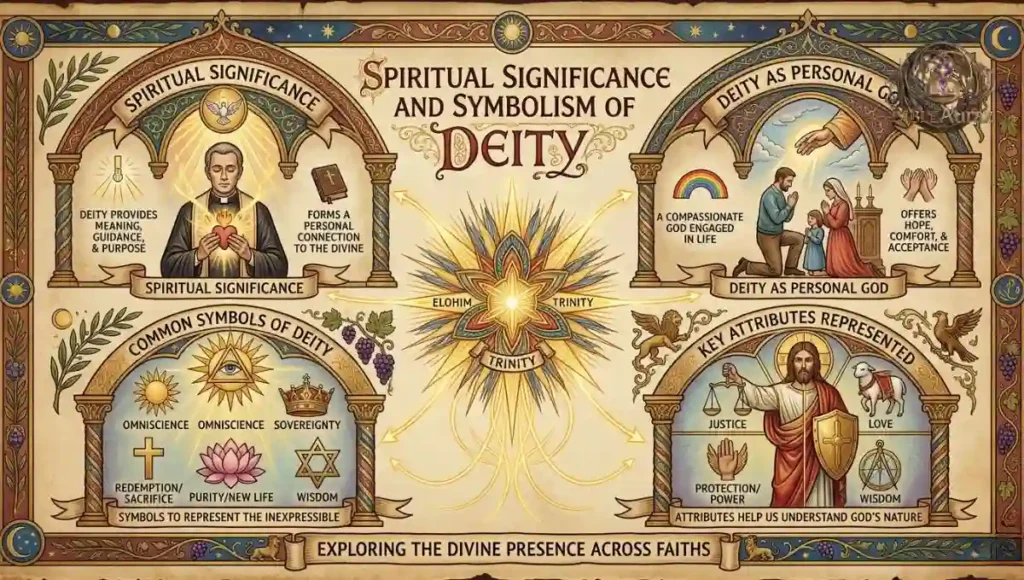
Beyond doctrine, deity meaning in the Bible carries spiritual weight for how believers relate to God daily. It shapes worship, obedience, and trust.
1. Deity as God’s Presence
God’s presence in daily life flows directly from His deity. Because God is omnipresent, believers are never separated from His care, guidance, or comfort.
Psalm 16:11 reminds Christians that in God’s presence there is fullness of joy, a truth rooted in understanding deity meaning in the Bible correctly.
2. Deity and Human Faith
Faith in God meaning is strengthened when believers understand exactly who they are trusting. A vague concept of “a higher power” cannot anchor faith the way the biblical God can.
Hebrews 11:6 teaches that without faith it is impossible to please God, and that faith requires believing He exists and rewards those who seek Him.
3. Transformation Through Knowing God
Spiritual transformation through faith begins when a person moves from intellectual agreement to personal relationship with God’s divine nature.
Romans 12:2 describes this renewal of the mind, a process rooted in grasping the true deity meaning in the Bible rather than cultural assumptions about God.
Biblical Evidence and Scriptures About Deity
Scripture offers consistent testimony to God’s deity from Genesis through Revelation. The table below highlights key passages that support the biblical meaning of deity.
| Scripture | Testament | Evidence of Deity |
| Exodus 3:14 | Old Testament | God identifies Himself as “I AM” |
| Isaiah 9:6 | Old Testament | Messiah called “Mighty God” |
| John 1:1 | New Testament | The Word (Jesus) was God |
| John 8:58 | New Testament | Jesus applies “I AM” to Himself |
| Colossians 2:9 | New Testament | Fullness of Deity dwells in Christ |
| Revelation 1:8 | New Testament | God describes Himself as Alpha and Omega |
The Old Testament view of God establishes His uniqueness, while the New Testament revelation of God confirms that Jesus shares this same eternal nature.
Together, these passages form a unified scriptural proof of Jesus’ divinity and reinforce God’s authority and power as Creator of heaven and earth.
Deity in Daily Life and Spiritual Experience
Knowing deity meaning in the Bible is not only theological—it shapes how Christians live, pray, and respond to challenges each day.
1. Recognizing God’s Deity in Life
Believers recognize God’s deity through answered prayer, creation’s order, and the conviction of the Holy Spirit. Romans 1:20 says God’s invisible qualities are clearly seen in what He has made.
2. Deity in Christian Belief
Christian beliefs about God shape worship styles, church doctrine, and personal devotion. Holding firmly to the biblical meaning of deity guards against drifting into false teaching.
3. Responding to God’s Deity
Worshiping God in spirit and truth, as described in John 4:24, is the natural response to encountering His deity. This worship flows from understanding, not mere ritual.
Practical Lessons and Faith Insights
Below are practical takeaways for applying deity meaning in the Bible to everyday Christian living:
- Spend time in Scripture to deepen understanding of God’s attributes and divine nature
- Approach prayer with confidence, knowing God’s eternal nature in the Bible guarantees His attention
- Reflect on the holiness of God in Scripture before approaching Him in worship
- Teach children and new believers the difference between God and deity in the Bible to build a solid foundation
- Examine personal beliefs against Scripture rather than cultural opinion
Frequently Asked Questions
What does deity mean in the Bible verse explanation?
Deity in Scripture refers to God’s essential divine nature—eternal, self-existent, and worthy of worship above all else.
Is Jesus considered a deity in Christianity?
Yes, Jesus is fully God, sharing the same divine nature as the Father, as seen in passages like John 1:1 and Colossians 2:9.
What is the difference between God and deity in the Bible?
“God” refers to the personal being Christians worship, while “deity” describes the divine essence or nature that God possesses fully.
Why is God called a deity in the Bible?
God is called a deity because He possesses qualities no created being can have—eternal existence, omniscience, and supreme authority.
How does the Bible define God’s nature in Scripture?
The Bible defines God’s nature through His holiness, love, justice, and eternal existence, consistently displayed from Genesis to Revelation.
Conclusion
Exploring deity meaning in the Bible reveals a God who is eternal, holy, and personally present in the lives of believers. From the Father’s sovereignty to the deity of Christ and the work of the Holy Spirit, Scripture presents one unified divine nature in three persons.
Understanding this truth strengthens faith, deepens worship, and transforms daily living. As believers continue studying God’s nature in Scripture, the biblical meaning of deity becomes not just a doctrine, but a living reality.

Welcome to BibleAuraz! I’m Abdul Mannan Haider — Christian Faith Writer | 10+ Years Bible Study Experience | Founder of (BibleAuraz.com) Sharing Bible verses, spiritual meanings, prayers, and biblical wisdom to strengthen your faith and inspire your daily walk with God.