
If you are searching for the Luke meaning in the Bible, you are asking one of the most spiritually rich questions in Christian faith. This name carries the weight of healing, light, compassion, and faithful service all woven together in one powerful life and one extraordinary Gospel.
The Luke meaning points to a “light-giver” , someone who illuminates truth and brings hope to the hurting. Understanding the Luke meaning goes far beyond simple etymology. It opens a window into God’s heart for the broken, the poor, and the forgotten. Let us walk through every dimension of this name and discover why it still speaks so clearly to believers today.
Biblical Meaning of Luke in the Bible
The Luke meaning in Scripture is rooted in both its linguistic origin and the life of the man who bore it. The name Luke is derived from the Latin name “Lucas,” which means “light-giving” or “bringer of light.” This foundation sets the tone for everything Luke represented in the New Testament truth, clarity, and divine presence shining through careful, compassionate writing.
The Luke meaning in the Bible centers on healing, mercy, and proclaiming God’s love to all people, especially the marginalized. Grasping the Luke meaning fully means grasping the heart of the entire Gospel that no one is too lost, too broken, or too far from God’s reach. When you understand what the name means, you understand the man and when you understand the man, you understand his Gospel.
Who Was Luke in the Bible?
Luke was a healer, historian, and devoted follower of Christ. His writings shaped how millions understand Jesus’s message. The Gospel of Luke and Acts together form nearly 28% of the New Testament. That is a remarkable contribution from someone who never personally walked with Jesus during His earthly ministry.
Luke was born at Antioch in Syria and was taught the science of medicine. He later became a companion of the Apostle Paul, traveling with him on missionary journeys and remaining loyal even during imprisonment.
| Key Facts About Luke | Details |
| Profession | Physician (doctor) |
| Nationality | Gentile (non-Jewish) |
| Biblical Works | Gospel of Luke + Acts of the Apostles |
| Mentioned in | Colossians 4:14, 2 Timothy 4:11, Philemon 1:24 |
| Role | Companion and fellow worker of Paul |
| Writing Style | Refined Greek, historically detailed |
Scholars have noted that Luke had an outstanding command of the Greek language. His vocabulary is extensive and rich, and his style at times approaches that of classical Greek. He was familiar with sailing and had a special love for recording geographical details all indicating that Luke was a well-educated, observant, and careful writer.
The Core Biblical Meaning of Luke
The core Luke meaning in the Bible rests on three pillars: light, healing, and faithful service.
- Light: The name Luke meaning “light-giving” perfectly describes his life’s work. Through the Gospel of Luke and Acts, he brought salvation’s message to generations.
- Healing: Luke’s background as a physician underscores his deep concern for both physical and spiritual healing. His portrayal of Jesus’ healing miracles is not merely a recounting of events, but an invitation for readers to understand the deeper healing Jesus offers to all people healing from sin and brokenness.
- Faithful Service: The biblical meaning of the name Luke shows that he is a friend, a dedicated worker, and a committed follower of Christ. Luke was described as a dear friend and beloved physician by the Apostle Paul in his letter to the Colossian church.
“Our dear friend Luke, the doctor, and Demas send greetings.” Colossians 4:14 (NIV)
Luke’s Unique Message in Scripture
The Luke meaning finds its clearest expression in what his Gospel uniquely presents. The Gospel according to Luke offers an account of the birth, ministry, death, and resurrection of Jesus of Nazareth. Luke presents the story of Jesus as the fulfillment of promises God previously made to the people of Israel Jesus is Christ, the Lord, the Redeemer sent by God to declare God’s salvation to all people.
The name Luke comes from the Greek word Loukas, often linked to light or brightness. In the Bible, Luke brings light to the life of Jesus, especially His compassion and humanity. No other Gospel writer places such consistent emphasis on mercy, grace, and God’s love for those the world overlooks.
The Gospel of Luke: Key Teachings and Themes
The Gospel of Luke is one of the most beloved books in all of Scripture, and its themes directly reflect Luke meaning compassion, mercy, hope, and healing.
A central theme of Luke is the humanity and compassion of Jesus, showcasing his interactions with diverse individuals, including women and marginalized groups. This was not accidental. Luke the physician saw people the way a healer sees them with attentiveness to their pain and their need for restoration.
| Theme | Key Verse / Story | Core Message |
| Compassion for the Marginalized | Good Samaritan (Luke 10:25–37) | Love transcends social barriers |
| God’s Mercy and Forgiveness | Prodigal Son (Luke 15:11–32) | God welcomes the repentant home |
| Healing and Restoration | Ten Lepers (Luke 17:11–19) | Jesus heals body and soul |
| Salvation for All | Zacchaeus (Luke 19:1–10) | No one is beyond God’s reach |
| The Holy Spirit’s Power | Luke 4:18 | God anoints for gospel proclamation |
| Prayer and Devotion | Luke 11:1–13 | God hears and answers prayer |
| Joy in Heaven | Lost Sheep (Luke 15:3–7) | God rejoices over every repentant sinner |
Luke’s Gospel contains 24 parables more than any other Gospel revealing Jesus’ compassion, forgiveness, and concern for outsiders. Nine are unique to Luke, including the Good Samaritan and the Prodigal Son. Each story offers a window into the kingdom of God, where grace upends expectations and joy meets repentance.
A key verse that captures the Luke meaning perfectly is Luke 19:10 “For the Son of Man came to seek and to save the lost.” This single sentence summarizes Luke’s entire Gospel vision. Jesus did not wait for people to come to Him; He went after them.
Luke frequently emphasizes the themes of joy and praise in response to God’s redemptive work. The parables of the Lost Sheep, the Lost Coin, and the Prodigal Son highlight God’s joy over the repentance of sinners. This theme stresses that salvation is available to everyone, regardless of their past, and that God’s grace is abundant.
Must Read: Waking Up at 4am Biblical Meaning
Why the Name Luke Still Matters for Christians Today

The Luke meaning is not a relic of ancient history it is a living message that speaks directly into the modern Christian experience. Whether you are exploring Christian baby names, deepening your faith lessons from Luke, or simply seeking God’s voice in your daily life, the Luke meaning offers a beautiful, enduring reminder: hope in the Bible is real, healing is possible, and God’s love never runs out.
Here is why the Luke meaning remains profoundly relevant for every generation of Christians:
- For the hurting: Luke’s Gospel was written especially for those on the margins. If you feel forgotten or broken, Luke’s Jesus is coming to find you.
- For seekers: Luke wrote in careful, historical detail precisely so that those exploring faith would have a trustworthy account of Jesus.
- For servants: Luke modeled what it means to use your gifts, his medical training, his writing skill, his friendship entirely in service of the Kingdom.
- For the hopeful: Luke reminds us that following Jesus involves an active concern for the needy and a willingness to put love and mercy above social or economic norms.
Paul’s fellow worker Luke never sought fame. He simply served faithfully. That is the real biblical meaning of Luke: a life that reflects Christ’s light into darkness.
Spiritual Significance and Symbolism of Luke
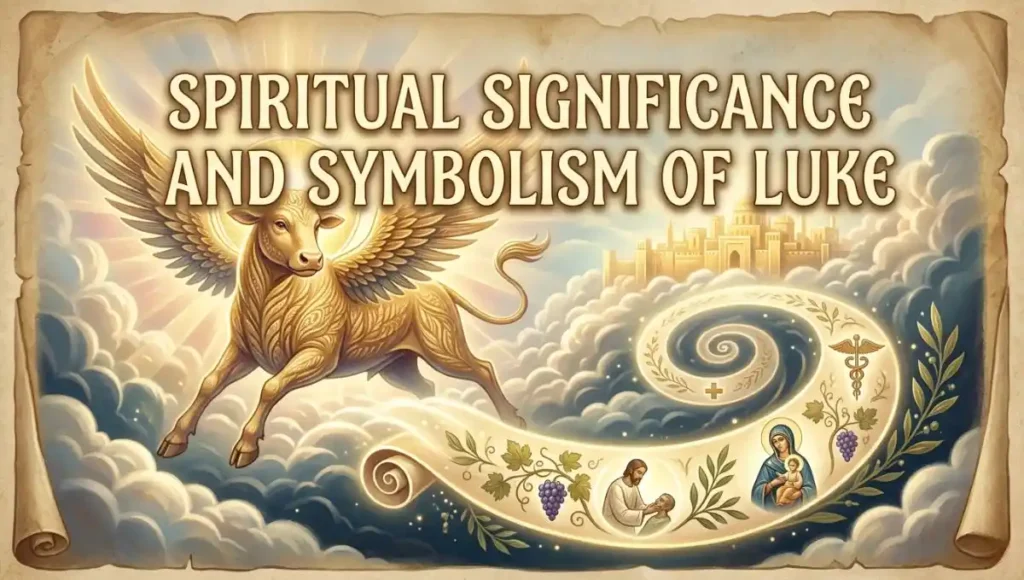
Beyond the biographical facts, the Luke meaning carries rich spiritual symbolism that can transform how we understand our own lives and faith journey. Exploring the Luke meaning spiritually reveals a calling to be healers, light-bearers, and compassionate servants in every season of life.
Luke as a Symbol of Spiritual Healing
When we explore the spiritual meaning of Luke, healing stands at the very center. As a physician by training, Luke brought a unique sensitivity to Christ’s ministry of restoration. His background as a physician underscores his deep concern for both physical and spiritual healing.
In Christian faith, the Luke meaning as a symbol of healing operates on several levels:
- Physical healing Luke recorded Jesus’ miracles of healing in vivid, medically-aware detail
- Emotional healing the parables of the lost sheep and prodigal son address wounds of rejection and shame
- Spiritual healing the Gospel’s core message is that Jesus came to restore what sin had broken
- Social healing Luke shows Jesus restoring outcasts to community and dignity
“The Spirit of the Lord is upon me, because he has anointed me to proclaim good news to the poor. He has sent me to proclaim liberty to the captives and the recovery of sight to the blind.“ Luke 4:18 (ESV)
This verse captures the Luke meaning in its fullest spiritual sense. God’s healing through Christ is total; it touches every dimension of human need.
Luke and Personal Faith Growth
The Luke meaning also speaks directly to individual spiritual development. The Luke meaning teaches us that God can use any background medical, academic, creative, or vocational for His glory. Reflecting on the name Luke reminds us of the enduring power of faith, knowledge, and divine love that shines through the ages.
Luke’s example challenges every believer to ask: How am I using my unique skills and background to serve God? Luke used medicine, language, and history. You may use teaching, music, hospitality, or technology but the calling is the same.
Light appears as a dominant theme in Luke’s writings. Luke’s ministry brought this light to countless souls. Personal faith grows when believers step into that same calling becoming bearers of light in their own homes, communities, and workplaces.
Biblical Interpretations of Luke in Dreams or Real Life
Many Christians wonder whether encountering the name Luke in unexpected ways carries spiritual significance. While Scripture does not provide a direct dream-interpretation formula, the Luke meaning can offer meaningful spiritual reflection. The Luke meaning at its core light, healing, and service makes it a spiritually rich lens for prayerful discernment.
Seeing or Hearing Luke in a Dream
In biblical dream interpretation, names often carry the weight of their meaning. If you encounter the name Luke in a dream, its core associations may be worth prayerfully considering:
| Dream Symbol | Possible Spiritual Reflection |
| The name “Luke” | A season of healing or restoration beginning |
| A physician figure | God as the Great Physician offering wholeness |
| Bright light | God’s truth illuminating a dark area of your life |
| Reading or writing | A calling to preserve, share, or document faith |
| A journey with others | A season of faithful companionship and service |
The Luke meaning in a dream context invites you to ask: Is God calling me into a healing ministry? Is there an area of my life where His light needs to shine?
Luke in Real-Life Experiences
The biblical interpretation of the name Luke in everyday life connects to moments of unexpected healing, restored relationships, or quiet acts of service. When you meet someone named Luke, or feel drawn to the Gospel of Luke in your devotional time, it may reflect a season in which God is offering you deeper insight into His love and care.
The Luke meaning in real life often appears as:
- A prompting to serve someone who is hurting
- An unexpected healing physical, emotional, or relational
- A call to use your professional skills in God’s service
- A renewed desire to study God’s Word with careful attention
- A deepening compassion for those society marginalizes
Practical Lessons and Faith Insights
The Luke meaning in the Bible is not merely theological, it is intensely practical. The Luke meaning challenges every Christian to live out compassion, faithful service, and Spirit-led courage. Here are actionable lessons drawn from Luke’s life and Gospel for every Christian today:
1. Use Your Gifts for God’s Kingdom Luke was a trained physician, yet he used that background to write the most detailed account of Jesus’ healing ministry. Whatever your skill, it can serve God’s purposes.
2. Pursue Compassion Actively The Parable of the Good Samaritan challenges societal prejudices and calls for unconditional compassion and mercy that transcends ethnic and social barriers. The Luke meaning demands that we cross uncomfortable boundaries to help others.
3. Value the Overlooked Luke gave special attention to women, children, the poor, and sinners. Luke highlights Jesus’ care for marginalized groups, including women, the poor, and sinners. Following the Luke meaning means seeing people the way Jesus sees them.
4. Be a Faithful Companion Luke stayed with Paul through imprisonment, danger, and uncertainty. The Luke meaning calls us to loyal, costly friendship showing up when others walk away. Being a Luke in someone’s life means showing up when it is costly.
5. Document and Share God’s Faithfulness Luke preserved the story of Jesus with historical care. We are called to tell what God has done in conversation, in writing, in testimony.
6. Pray Without Ceasing Luke frequently shows Jesus praying and teaches about the importance of a personal relationship with God. The Luke meaning calls us back to a life of consistent, dependent prayer.
7. Trust God’s Timing Luke wrote his Gospel years after Jesus’ resurrection. He waited, gathered testimony, and wrote carefully. The Luke meaning encourages patience and diligence in God’s work.
Conclusion
The Luke meaning in the Bible is one of the most complete portraits of Christian calling found in any single name. From its etymological roots in light-giving to its embodiment in a physician, historian, and faithful servant of Christ, the Luke meaning encompasses healing, hope, mercy, and God’s relentless love for humanity. The depth of the Luke meaning invites every believer into a life of compassionate, Spirit-empowered service.
The Luke meaning in the Bible is a message of hope, healing, and God’s gentle presence. Luke reminds us that Jesus came close to the hurting, the lost, and the forgotten and He still does.
Whether you carry this name, love someone who does, or simply feel drawn to the Gospel of Luke in your spiritual journey, the message is the same: God is the Great Physician, light always overcomes darkness, and no one is too broken or too far gone to receive His healing grace.
Let the Luke meaning be more than a definition, let it be a daily reminder to shine, to serve, to heal, and to share the good news that Jesus came to seek and save the lost. The Luke meaning is ultimately a call to carry the light of Christ into every corner of your world.
“For the Son of Man came to seek and to save the lost.” Luke 19:10 (ESV)

Welcome to BibleAuraz! I’m Abdul Mannan Haider — Christian Faith Writer | 10+ Years Bible Study Experience | Founder of (BibleAuraz.com) Sharing Bible verses, spiritual meanings, prayers, and biblical wisdom to strengthen your faith and inspire your daily walk with God.